CTRR COURSES 

Religious Trauma 101: Understanding and Healing Through the Body (for Professionals)

INSTRUCTOR: Dr. Laura Anderson, PhD, LMFT APA CE Credits: 1.75 This program is co-sponsored with Traumastry. Traumastry is approved by the American Psychological Association and NBCC to sponsor continuing education for psychologists. Traumastry maintains responsibility for this program and its content. Learning Objectives:  Participants will be able to identify and describe three somatic presentations of religious trauma and explain how they align with CPTSD symptom clusters in clinical assessment and treatment planning. Participants will demonstrate effective use of three somatic techniques within trauma-informed psychological treatment of clients recovering from religious trauma Program Justification and Summary This program offers licensed mental health professionals a clinically grounded, trauma-informed exploration of religious trauma that builds upon doctoral-level training in psychology by integrating somatic psychology, interpersonal neurobiology, and complex PTSD (CPTSD) into advanced clinical assessment and intervention. Designed to extend postdoctoral-level knowledge in assessment and intervention, the course focuses on the ways in which religious trauma—particularly from high-control religious environments—manifests in the body, and how these somatic imprints parallel the symptomology of CPTSD. Participants will first analyze the embodied presentations of religious trauma, including chronic sympathetic activation, prolonged freeze/fawn responses, and fragmented body awareness. Drawing on research from trauma studies and the ICD-11 diagnostic framework, the program will explore how coercive religious systems can result in persistent disruptions to emotion regulation, self-concept, and relational functioning. Participants will use clinical case examples and interventions to better assess the physiological effects of religious trauma, including somatic dissociation, affect dysregulation, and internalized spiritual shame (Frewen et al., 2022; Cloitre et al., 2021; Karatzias et al., 2019; Helsel, 2015). Building on this foundation, the second portion of the program explains three trauma-informed, body-based techniques that create nervous system regulation and boundary development during religious trauma recovery. These interventions are applied from Somatic Experiencing®, attachment theory and trauma-informed mindfulness practices. Participants will be able to apply these interventions clinically, with an emphasis on titration, pacing, and adaptability for clients whose trauma stems from spiritual abuse, authoritarian doctrine, or disembodied theology (Menakem, 2017; Payne et al., 2015; Grabbe & Miller-Karas, 2019). Throughout the program, emphasis is placed on preparing clinicians to integrate somatic and cognitive approaches in the treatment of religious trauma while maintaining cultural humility, ethical care, and clinical rigor. This program fulfills the goals of continuing education by advancing participant competency in trauma theory, evidence-based intervention, and inclusive psychological practice. In doing so, this course equips psychologists to better serve individuals impacted by coercive religious systems, an often-overlooked population in trauma care, thereby enhancing public access to ethical and effective psychological treatment.

$69.00 USD

Religious Trauma and the Nervous System (for Professionals)

Module 2: Religious Trauma and the Nervous System INSTRUCTOR: Dr. Laura Anderson, PhD, LMFT APA CE Credits: 1.5 This program is co-sponsored with Traumastry. Traumastry is approved by the American Psychological Association and NBCC to sponsor continuing education for psychologists. Traumastry maintains responsibility for this program and its content. Learning Objectives: Participants will identify and describe four primary autonomic nervous system responses and analyze their clinical presentation in survivors of high-control religion. Participants will demonstrate effective use of three body-based interventions to support regulation and embodiment in survivors of high-control religion.   Program Summary and Justification:  This program is designed to increase the clinical competency of licensed mental health professionals by analyzing their understanding of nervous system responses in survivors of religious trauma and applying knowledge and practice in clinical settings. This program is designed for psychologists who have already completed foundational training in trauma theory and are seeking advanced skills in somatic assessment and intervention within religious trauma contexts. Grounded in current research on the autonomic nervous system and polyvagal theory, the program offers a dual focus: (1) conceptual education in nervous system survival responses through the lens of religious trauma, and (2) applied training in trauma-informed somatic interventions to support interoception, regulation, and embodiment. In the first half of the program, participants will identify the four primary nervous system survival states—fight, flight, freeze, and fawn—as they are assessed in individuals emerging from high-control religious environments. These physiological responses, while often misinterpreted as personality traits or resistance, are adaptive strategies developed in response to chronic fear, spiritual coercion, and loss of bodily autonomy (Porges, 2017; Dana, 2020; Anderson, 2023; MatĂ©, 2022). Clinicians will analyze how these survival patterns are shaped by experiences such as rigid authority structures, shame-based teachings, and spiritual bypassing.  In the second half of the program, participants will apply experiential learning through three body-based interventions adapted for religious trauma recovery. These tools are introduced with attention to therapeutic pacing, consent, and clinical relevance, especially for clients whose bodily cues were pathologized or suppressed in religious settings (Menakem, 2017; Khalsa et al., 2018; Paulus, 2018). These interventions are drawn from established psychological disciplines including clinical neurobiology, trauma psychotherapy, and somatic psychology, and are taught in alignment with ethical standards and evidence-based practice models. By bridging nervous system science, somatic psychology, and religious trauma theory, this program expands postdoctoral-level knowledge and equips clinicians with both theoretical insight and hands-on tools to better support clients who cannot access healing through cognitive approaches alone (Grabbe & Miller-Karas, 2018; Ogden, 2021; Van der Kolk, 2015).  

$69.00 USD

Adverse Religious Experiences, Spiritual Abuse and Dynamics of Power and Control (for Professionals)

INSTRUCTOR: Dr. Laura Anderson, PhD, LMFT APA CE Credits: 1.25 This program is co-sponsored with Traumastry. Traumastry is approved by the American Psychological Association and NBCC to sponsor continuing education for psychologists. Traumastry maintains responsibility for this program and its content. Learning Objectives:  Participants will identify and assess five core characteristics of high-control religious systems and describe how these reflect clinically recognized patterns of coercive control relevant to trauma-informed psychological assessment Participants will demonstrate effective use of three trauma-informed clinical interventions to support nervous system regulation, agency restoration, and post-traumatic recovery in clients impacted by spiritual abuse and high-control religion. Program Summary and Justification This program provides psychologists and licensed mental health professionals with a trauma-informed framework for identifying and treating the psychological impacts of spiritual abuse and high-control religious environments. Integrating research from domestic violence literature, religious trauma theory, and spiritual abuse scholarship, the program assists clinicians in identifying and assessing the structural and relational dynamics that mirror coercive control in interpersonal abuse. This program builds upon foundational training in trauma theory and intervention by applying established psychological models to the emerging clinical area of religious trauma, enhancing clinicians’ ability to differentiate spiritual abuse from supportive religious practice and to deliver effective, evidence-based care in complex clinical presentations. Participants will learn to identify at least five defining characteristics of high-control religious systems—using evidence-based research and clinical case conceptualizations (Ellis et al., 2022; Jackson et al., 2021; Stark, 2018; Ellis et al., 2023). These characteristics are analyzed in parallel with the Power and Control Wheel from the Duluth Model, adapted for use in religious contexts (Woods, 2022), to explain the overlap between spiritual coercion and domestic abuse tactics. The program also introduces the concept of Adverse Religious Experiences (AREs) and discusses the importance of differentiating between pro-social religious involvement and trauma-inducing spiritual environments (Chhabra et al., 2025). Building on this theoretical foundation, participants will apply three targeted clinical interventions: (1) Mapping the Religious Power and Control Wheel to increase client awareness and name harmful dynamics; (2) Rebuilding a Felt Sense of Safety through somatic resource activation (Grabbe & Miller-Karas, 2018); and (3) Reframing Fear-Based Beliefs using cognitive techniques drawn from acceptance-based frameworks (Hayes et al., 2016). These approaches are designed to assist clients in identifying spiritual abuse, reconnecting with personal agency, and regulating their nervous system in the aftermath of trauma rooted in high-control religious settings (Anderson, 2023; Milner et al., 2020; McCormick et al., 2018). This program supports the ongoing development of clinical competency by equipping professionals to assess and treat religious trauma with nuance, rigor, and cultural humility. Participants will be prepared with conceptual clarity and practical tools to support trauma recovery, boundary repair, and post-traumatic growth in clients navigating the effects of spiritual abuse.

$69.00 USD

Stabilizing the Nervous System (for Professionals)

INSTRUCTOR: Dr. Laura Anderson, PhD, LMFT APA CE Credits: 1.5 This program is co-sponsored with Traumastry. Traumastry is approved by the American Psychological Association and NBCC to sponsor continuing education for psychologists. Traumastry maintains responsibility for this program and its content. Learning Objectives Participants will identify and describe four autonomic nervous system responses and assess how these responses manifest in the clinical presentation of clients recovering from high-control religious environments Participants will demonstrate effective use of three trauma-informed, body-based techniques to aid in support of clients with religious trauma.  Program Summary and Justification This program provides psychologists and licensed mental health professionals with an integrated description of autonomic nervous system responses and body-based healing strategies for clients recovering from religious trauma. Using frameworks from polyvagal theory, trauma theory, and somatic psychology, the program describes how fight, flight, freeze, and fawn responses may present in individuals raised in or exiting high-control religious systems. This program builds on foundational doctoral training in trauma and clinical psychology by advancing practitioner skill in recognizing and treating body-based trauma responses specifically associated with religious harm. Participants will be able to describe how these survival states are adaptive physiological responses to chronic fear, shame, or spiritual coercion (Porges, 2017; Dana, 2020; Ogden, 2021). The program highlights the phenomenon of neuroception as a critical lens for assessing how survivors may feel unsafe even in the absence of external danger (Porges & Dana, 2018). Drawing from religious trauma theory, participants will assess how distorted neuroception often stems from internalized messages and how this influences somatic states such as dissociation, hyperarousal, or collapse (Anderson, 2023; Khalsa et al., 2018). Building on this theoretical foundation, the program explains three trauma-informed, somatic techniques for application: (1) Interoceptive Awareness & Grounding, which helps clients reconnect with bodily sensations and internal cues (Khalsa et al., 2018); (2) Pendulation & Titration, adapted from Somatic Experiencing® to build capacity for navigating activation and safety (Levine, 2018); and (3) Body Relationship Repair, a practice that reframes the body as a partner in healing rather than a site of sin, shame, or disembodiment (Chhabra et al., 2025; Grabbe & Miller-Karas, 2018; Loizzo, 2018). These tools are designed to be proactive interventions for survivors who have learned to suppress or distrust their body’s signals due to religious conditioning (Menakem, 2017; Carlson et al., 2022; Firestone, 2022). By combining nervous system science with practical, body-based interventions, this program equips clinicians to apply clinical interventions with survivors of religious trauma that create internal safety, autonomy, and embodied recovery. Participants will deepen their ability to integrate somatic and cognitive approaches in culturally responsive, ethically sound trauma treatment, particularly in the context of spiritual abuse and identity-based trauma.

$69.00 USD

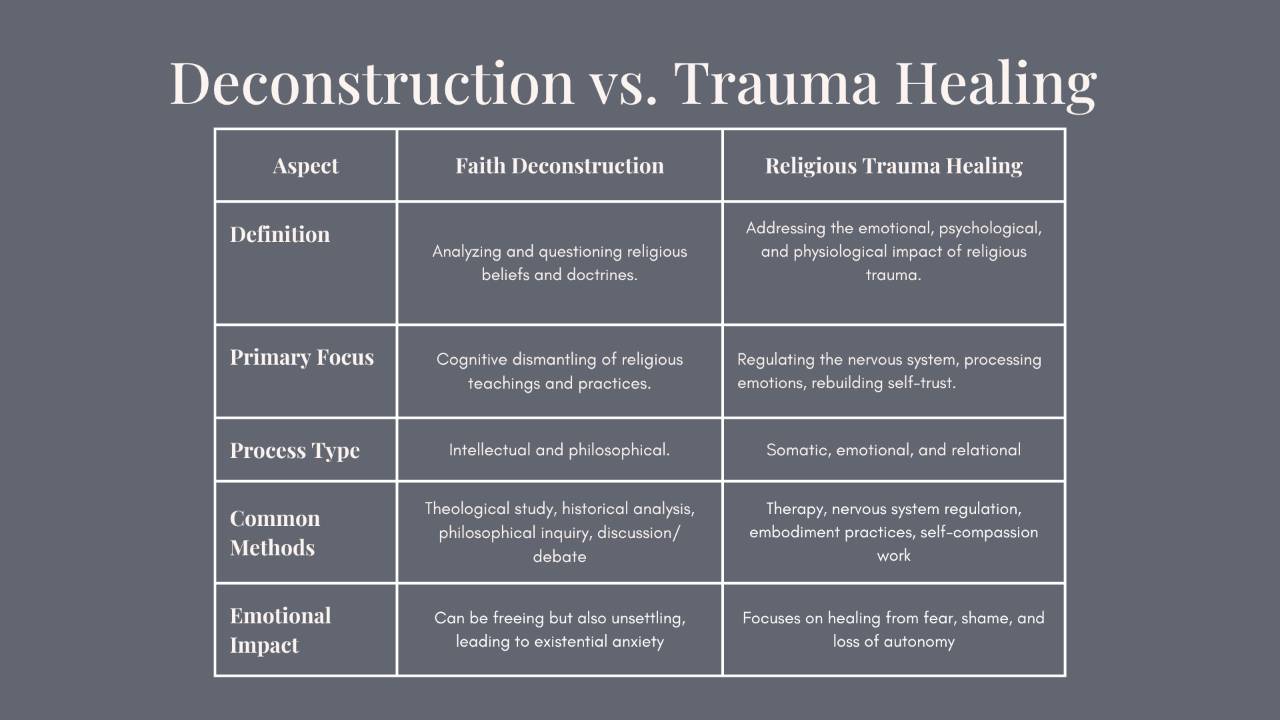
Deconstruction vs. Trauma Healing (for Professionals)

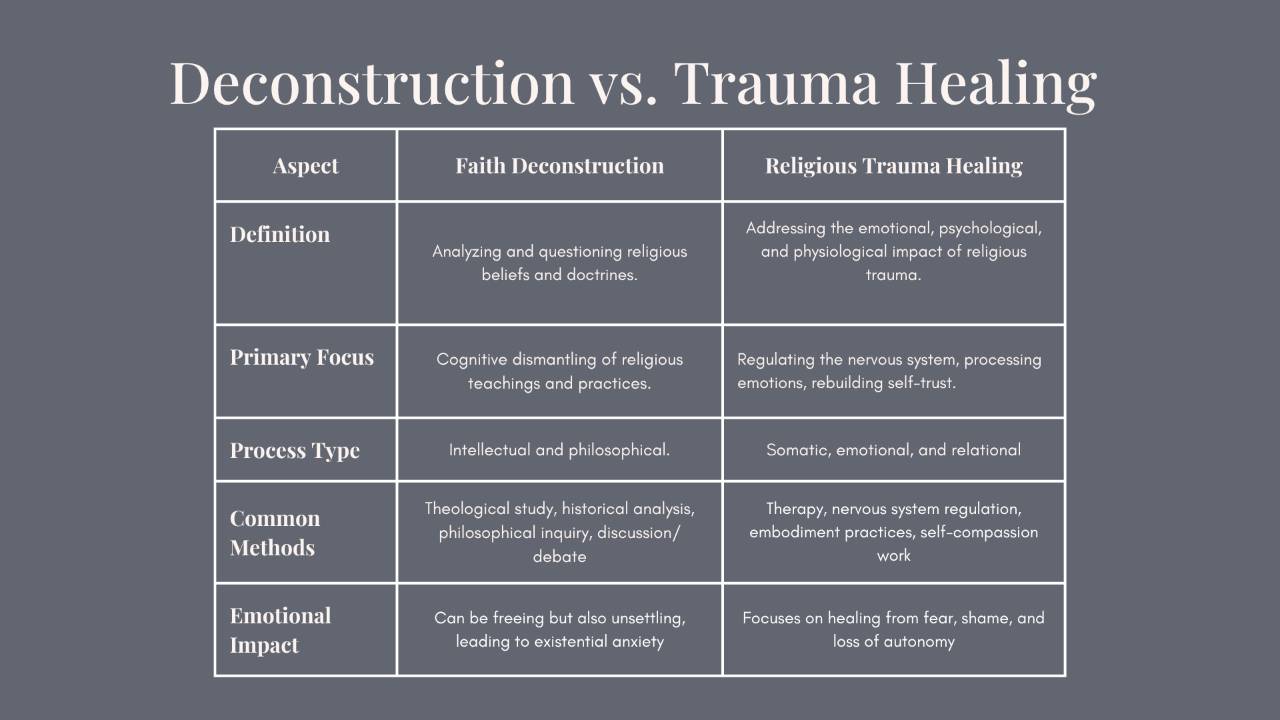
INSTRUCTOR: Dr. Laura Anderson, PhD, LMFT APA CE Credits: 1 This program is co-sponsored with Traumastry. Traumastry is approved by the American Psychological Association and NBCC to sponsor continuing education for psychologists. Traumastry maintains responsibility for this program and its content. Learning Objectives Participants will be able to differentiate three clinical distinctions between cognitive faith deconstruction and religious trauma recovery by analyzing the role of autonomic nervous system processes, somatic trauma responses, and embodied conditioning in clients exiting high-control religious environments. Participants will be able to apply three evidence-informed somatic interventions to support nervous system regulation and reduce embodied trauma responses among clients recovering from high-control religious systems or religious/spiritual abuse.  Program Summary and Justification This program provides psychologists and licensed mental health professionals with an evidence-informed framework for distinguishing cognitive faith deconstruction from trauma recovery among individuals exiting high-control religious systems. Although many clients engage in belief-level reevaluation after leaving restrictive religious environments, emerging research indicates that religious or spiritual abuse is associated with significant psychological distress, identity disruption, and long-term impairments in psychological and spiritual functioning (Captari & Worthington, 2024; Chhabra et al., 2025; Ellis et al., 2023; Ellis et al., 2025). Studies examining religious deconversion and transitions out of rigid religious communities further demonstrate that leaving these environments often involves complex psychological adjustments related to identity reconstruction, worldview change, and loss of social belonging (Bleidorn et al., 2023; Streib, 2021). These findings highlight an important clinical distinction: while cognitive deconstruction involves reevaluating belief systems, trauma recovery requires addressing psychological and physiological consequences associated with coercive or abusive religious environments. Research on trauma and interoceptive processing provides additional insight into why cognitive belief change alone may not resolve trauma-related symptoms. Interoception—the capacity to perceive internal bodily states—plays a central role in emotional regulation and the nervous system’s detection of safety and threat (Khalsa et al., 2018). Disruptions in interoceptive awareness are associated with trauma-related dysregulation and can contribute to persistent experiences of fear, shame, dissociation, or hyperarousal even after individuals cognitively reject harmful religious teachings. Trauma research examining the relationship between adverse experiences and religious belief systems also indicates that traumatic events can significantly shape religious cognition, identity development, and meaning-making processes (Leo et al., 2019). Together, these findings underscore the importance of trauma-informed clinical assessment that distinguishes belief change from ongoing trauma-related physiological and psychological responses. Building on this empirical foundation, the program introduces evidence-informed somatic intervention strategies designed to support nervous system regulation and reduce trauma-related physiological distress in individuals recovering from high-control religious systems. Somatic trauma interventions that incorporate interoceptive awareness and body-based processing have been shown to support emotional regulation and reduce trauma-related symptoms by strengthening awareness of internal bodily cues and promoting integration between physiological and psychological processes (Payne et al., 2015; Khalsa et al., 2018; Oakley et al., 2024). These interventions are particularly relevant for survivors of religious trauma, as individuals raised in high-control religious environments may have been conditioned to suppress bodily signals such as intuition, emotional expression, or internal cues related to safety and autonomy. Research examining the experiences of individuals leaving coercive religious communities further indicates that survivors frequently report ongoing distress, identity confusion, and challenges adjusting to life outside these systems (Hadding et al., 2023; Nica, 2019; Ransom et al., 2021; Ransom et al., 2022; Slade et al., 2023). By integrating empirical findings from research on religious trauma, trauma psychology, and interoceptive processes, this program equips psychologists with clinically applicable tools for assessment and intervention when working with individuals recovering from harmful religious environments. Participants will strengthen their ability to differentiate cognitive belief revision from trauma-related clinical presentations and apply evidence-informed somatic strategies that support nervous system regulation, psychological integration, and long-term recovery for clients navigating the aftermath of high-control religious experiences.

$69.00 USD

Developing Self-Compassion, Self-Trust, and Embodied Boundaries (for Professionals)

INSTRUCTOR: Dr. Laura Anderson, PhD, LMFT APA CE Credits: 1 This program is co-sponsored with Traumastry. Traumastry is approved by the American Psychological Association and NBCC to sponsor continuing education for psychologists. Traumastry maintains responsibility for this program and its content. Learning Objectives:  Participants will be able to analyze three mechanisms through which high-control religious environments undermine self-compassion, self-trust, and personal boundary formation by reinforcing an external locus of control and chronic shame, and evaluate how these mechanisms influence trauma-related psychological functioning. Participants will be able to apply three evidence-informed somatic and interoceptive intervention strategies that support development of self-compassion, restoration of self-trust, and establishment of embodied personal boundaries among clients recovering from high-control religious environments. Program Summary and Justification This program provides psychologists and licensed mental health professionals with an evidence-informed framework for understanding how high-control religious environments can disrupt the development of self-compassion, self-trust, and healthy personal boundaries. Research on religious and spiritual abuse indicates that exposure to coercive religious systems is associated with significant impairments in psychological functioning, including increased shame, emotional distress, and disruptions in identity development (Ellis et al., 2023). Individuals leaving high-control religious environments frequently report difficulties with autonomy, internal decision-making, and self-evaluation due to prolonged conditioning that emphasizes obedience to external authority over internal cues related to safety, emotion, and personal agency (Carlson et al., 2022; Zeligman et al., 2019). These dynamics often reinforce an external locus of control that can complicate trauma recovery by weakening individuals’ capacity to trust their internal experiences or establish protective relational boundaries. Trauma research further suggests that chronic shame and disrupted self-perception are common consequences of prolonged exposure to controlling or abusive relational systems. Studies examining trauma-related psychological processes demonstrate that experiences of trauma are associated with increased dissociation, emotional dysregulation, and alterations in self-concept that may persist long after the original context of harm has ended (Santoro et al., 2025; Schauer & Elbert, 2010). Conversely, research on self-compassion indicates that self-compassionate attitudes toward the self are associated with improved emotional regulation and reduced trauma-related distress, suggesting that strengthening self-compassion may be an important component of trauma recovery (Scoglio et al., 2018; Marshall & Brockman, 2016). Additional research on relational boundaries indicates that flexible and internally guided boundaries are associated with higher levels of self-compassion and psychological well-being, underscoring the importance of restoring internal self-regulatory processes following experiences of coercive control (Snyder & Luchner, 2020). Building on this empirical foundation, the program introduces evidence-informed somatic and interoceptive intervention strategies designed to support development of self-compassion, restoration of self-trust, and establishment of embodied personal boundaries in individuals recovering from high-control religious systems. Interoception—the awareness of internal bodily states—plays a central role in emotional regulation and the nervous system’s perception of safety and threat, making it a critical mechanism in trauma-informed treatment approaches (Khalsa et al., 2018). Somatic trauma interventions that incorporate interoceptive and body-based processing have been shown to support emotional regulation and reduce trauma-related physiological distress by strengthening the connection between physiological and psychological processes (Ferrari et al., 2019; Scoglio et al., 2018). Research examining embodied and movement-based trauma interventions further suggests that practices emphasizing bodily awareness and self-directed agency can support recovery among survivors of interpersonal trauma (Crews et al., 2016; Mazzio et al., 2021). Additionally, evidence indicates that self-compassion-focused interventions can improve psychological functioning and reduce self-critical thinking patterns associated with trauma exposure (Diedrich et al., 2016; Ferrari et al., 2019). By integrating empirical research from trauma psychology, religious trauma scholarship, and somatic intervention research, this program equips psychologists with clinically applicable tools for assessment and intervention when working with individuals recovering from high-control religious environments. Participants will strengthen their ability to analyze how coercive religious systems may disrupt internal self-regulatory processes and apply evidence-informed body-based strategies that support development of self-compassion, restoration of self-trust, and establishment of embodied personal boundaries in trauma recovery.

$69.00 USD

Religious Trauma and Grief (for Professionals)

INSTRUCTOR: Dr. Laura Anderson, PhD, LMFT APA CE Credits: 1 This program is co-sponsored with Traumastry. Traumastry is approved by the American Psychological Association and NBCC to sponsor continuing education for psychologists. Traumastry maintains responsibility for this program and its content. Learning Objectives Participants will be able to analyze six limitations of traditional grief frameworks and differentiate at least three forms of grief commonly observed among clients recovering from religious trauma, including identity grief, ambiguous loss, and disenfranchised grief. Participants will be able to apply three evidence-informed somatic and interoceptive intervention strategies that support nervous system regulation and facilitate emotional processing of identity-related and developmental grief among individuals recovering from high-control religious environments.   Program Summary and Justification This program provides psychologists and licensed mental health professionals with an evidence-informed framework for understanding and treating grief among individuals recovering from high-control religious environments. Traditional grief models were largely developed to describe bereavement following physical death and may not fully account for the complex forms of loss experienced by individuals exiting coercive religious systems. Contemporary grief research demonstrates that grief responses vary widely depending on the nature of the loss, the social context surrounding the loss, and the individual’s meaning-making processes (Bonanno & Malgaroli, 2019; Fadeeva et al., 2023). In the context of religious trauma, individuals frequently experience non-death losses such as loss of identity, community belonging, worldview, and perceived relationship with the divine. These losses are often socially unrecognized or invalidated, which may contribute to forms of disenfranchised or ambiguous grief that are not adequately addressed by traditional bereavement frameworks. Research examining religious disaffiliation and transitions out of high-control religious systems further indicates that individuals leaving such environments frequently experience identity disruption, social exclusion, and significant psychological adjustment during the process of reconstructing their worldview and personal identity (Bleidorn et al., 2024; Eastman & Twinley, 2024; Ransom et al., 2022). These experiences may create layered forms of grief that include relational loss, developmental loss, and identity-based grief. Studies examining psychological adaptation following major life disruptions suggest that grief and trauma responses often involve complex emotional, cognitive, and relational processes rather than a linear progression toward closure (Bonanno & Malgaroli, 2019; Guldin & Leget, 2024). For psychologists working with clients recovering from religious trauma, recognizing these diverse grief presentations is essential for accurate assessment and for avoiding the pathologization of normal emotional responses to profound life transitions. In addition to psychological and relational impacts, research in trauma and mental health indicates that grief responses are often closely connected to physiological regulation and emotional processing. Interoception—the awareness of internal bodily states—plays a critical role in emotional awareness, threat detection, and regulation of affective experiences (Khalsa et al., 2018). Disruptions in these processes are associated with trauma-related distress and difficulties regulating emotional states, suggesting that effective grief treatment may require interventions that address both psychological meaning-making and physiological regulation. Research examining grief support and coping with traumatic loss indicates that interventions that facilitate emotional processing and provide supportive relational contexts can improve psychological outcomes and reduce grief-related distress (Cacciatore et al., 2021; Fadeeva et al., 2023). Additional studies examining traumatic grief interventions suggest that structured therapeutic support can improve emotional regulation and resilience following significant losses (Ă–zcan & Kaya, 2019). Building on this empirical foundation, the program introduces evidence-informed somatic and trauma-informed interventions designed to support nervous system regulation and emotional integration of grief among individuals recovering from religious trauma. Body-based approaches that strengthen interoceptive awareness may help clients access and process grief-related emotions while maintaining physiological regulation, allowing for safer emotional engagement with loss (Khalsa et al., 2018). Research on posttraumatic growth further suggests that adaptive processing of loss can contribute to meaning reconstruction and improved psychological well-being following major life transitions (Lundberg et al., 2025). By integrating contemporary grief research with trauma-informed and somatic clinical frameworks, this program equips psychologists with practical strategies for assessing and treating complex grief associated with religious trauma. Participants will strengthen their ability to identify diverse grief presentations and apply evidence-informed interventions that support emotional integration, identity reconstruction, and long-term psychological recovery among clients navigating the aftermath of high-control religious environments.

$69.00 USD

High Control Religion and Sex (for Professionals)

INSTRUCTOR: Dr. Laura Anderson, PhD, LMFT APA CE Credits: 1.25 This program is co-sponsored with Traumastry. Traumastry is approved by the American Psychological Association and NBCC to sponsor continuing education for psychologists. Traumastry maintains responsibility for this program and its content. Learning Objectives Participants will be able to analyze three limitations of sexual frameworks promoted in high-control religious environments and evaluate two mechanisms through which these frameworks reinforce shame, sexual stigma, and behavioral control. Participants will be able to apply three trauma-informed, body-based intervention strategies that support restoration of sexual agency, reduction of shame-related responses, and development of embodied sexual self-awareness among clients recovering from purity culture or religious sexual repression.   Program Summary and Justification This program provides psychologists and licensed mental health professionals with an evidence-informed framework for understanding how sexual ideologies promoted within high-control religious systems may influence psychological functioning, identity development, and relational health. Research examining purity culture and abstinence-focused sexual education indicates that these frameworks often define sexuality narrowly as a set of moral behaviors rather than as a multidimensional aspect of identity, embodiment, and relational well-being (Carr & Packham, 2017; Fox et al., 2019). Such approaches frequently emphasize sexual restriction, gendered expectations regarding purity, and behavioral compliance, which can contribute to internalized shame, sexual stigma, and distorted beliefs about desire and bodily autonomy. Emerging research examining the psychological consequences of purity culture further suggests that these narratives may negatively influence sexual well-being and reinforce shame-based beliefs about sexuality, particularly among individuals socialized within conservative religious environments (Coates et al., 2025; Owens et al., 2021). Additional scholarship examining sexual ideology and gender norms indicates that moralized constructions of sexuality may reinforce patriarchal expectations and gendered sexual scripts, including the Madonna–Whore dichotomy, which positions women’s sexuality as either morally pure or morally deviant (Bareket et al., 2018). These frameworks may also function as mechanisms of behavioral and social control by linking sexual behavior to moral worthiness, spiritual legitimacy, or community belonging. Research examining coercive control and religious authority further demonstrates that systems of moralized behavioral regulation—including those related to sexuality—can contribute to psychological distress and difficulties with autonomy and self-trust (Lohmann et al., 2023; Mulvihill et al., 2022). For individuals exiting high-control religious systems, these internalized narratives may manifest clinically as sexual shame, fear of desire, dissociation during intimacy, or confusion regarding consent and bodily agency. In addition to psychological and relational impacts, trauma research suggests that experiences of coercive control and moralized sexual shame may influence bodily awareness, emotional regulation, and perceptions of safety within intimate contexts. Studies examining trauma and mental health outcomes indicate that exposure to coercive or controlling environments can contribute to disruptions in emotional regulation and self-concept, which may persist even after individuals leave those environments (Lohmann et al., 2023; McGraw et al., 2019). Research examining sexual trauma recovery and trauma-informed sexual health interventions further suggests that body-based therapeutic approaches may support healing by strengthening awareness of internal bodily cues and restoring a sense of safety, consent, and agency within intimate relationships (Gewirtz-Meydan, 2025; Weiner, 2022). Building on this empirical foundation, the program introduces trauma-informed, body-based intervention strategies designed to help individuals reconnect with embodied sexuality and develop self-directed sexual ethics following experiences of purity culture or religious sexual repression. Research examining embodied and movement-based trauma interventions suggests that practices emphasizing bodily awareness, sensory integration, and gradual exposure to safe physical experience can support recovery among survivors of interpersonal trauma (Cristobal, 2018; Nixon, 2023). By integrating empirical research from trauma psychology, sexual health research, and studies of religious sexual ideology, this program equips psychologists with clinically applicable tools for assessing and addressing the psychological and somatic effects of purity culture and religious sexual control. Participants will strengthen their ability to identify the psychological mechanisms through which religious sexual frameworks may influence clients’ mental health and apply evidence-informed interventions that support sexual agency, emotional safety, and embodied autonomy in trauma recovery.

$69.00 USD
High Control Religion and Relationships (for Professionals)

INSTRUCTOR: Dr. Laura Anderson, PhD, LMFT APA CE Credits: 1.25 This program is co-sponsored with Traumastry. Traumastry is approved by the American Psychological Association and NBCC to sponsor continuing education for psychologists. Traumastry maintains responsibility for this program and its content. Learning Objectives Participants will be able to analyze five relational control strategies commonly used in high-control religious environments and evaluate how these strategies contribute to relational trauma, attachment disruption, and difficulties with trust and interpersonal functioning. Participants will be able to apply three trauma-informed, body-based intervention strategies that support emotional regulation, boundary development, and restoration of relational safety among clients recovering from high-control religious environments. Program Summary and Justification This program provides psychologists and licensed mental health professionals with an evidence-informed framework for understanding how relational dynamics within high-control religious environments may contribute to trauma-related psychological and interpersonal difficulties. While religious trauma is often discussed in terms of belief systems or doctrinal ideology, emerging scholarship highlights the central role of relational structures—such as authority hierarchies, social surveillance, conditional belonging, and enforced isolation—in maintaining compliance and regulating behavior within high-control religious communities (Oakley & Kinmond, 2020). These relational mechanisms can shape individuals’ experiences of attachment, belonging, and interpersonal safety, often producing relational trauma when conformity is reinforced through shame, rejection, or threats of social exclusion. Research examining abuse perpetrated by religious authority figures demonstrates that power imbalances within religious systems can facilitate coercive relational dynamics that undermine autonomy and contribute to psychological distress (Chowdhury et al., 2022). Individuals who exit high-cost religious communities frequently report experiences of social isolation, identity disruption, and loss of primary relational networks following departure from the group (Björkmark et al., 2022; Ransom et al., 2022). These losses may produce complex relational grief and significant challenges in rebuilding interpersonal trust and support systems. Studies examining former members of cultic or high-control religious groups further suggest that early exposure to authoritarian relational environments may affect attachment processes and contribute to long-term difficulties with intimacy, trust, and relational boundaries (Kern & Jungbauer, 2022). These findings underscore the importance of equipping psychologists with frameworks for assessing how relational control dynamics influence psychological functioning among individuals recovering from religious trauma. In addition to relational disruptions, trauma research indicates that experiences of coercion, betrayal, and chronic relational threat may affect emotional regulation and interpersonal functioning. Exposure to traumatic relational environments has been associated with increased psychological distress and difficulties maintaining stable supportive relationships (Dworkin et al., 2018; Ryu & Park, 2018). Survivors may develop relational coping strategies such as hypervigilance, avoidance, or people-pleasing behaviors in response to past experiences of conditional acceptance or social rejection. These responses are often adaptive attempts to maintain safety within relational environments perceived as unpredictable or threatening. Building on this empirical foundation, the program introduces trauma-informed, body-based intervention strategies designed to support relational healing and restoration of interpersonal safety. Research on interoception and mental health suggests that awareness of internal bodily states plays an important role in emotional regulation and threat detection, which are central processes in trauma recovery (Khalsa et al., 2018). Somatic trauma interventions that emphasize bodily awareness and regulation may help individuals recognize internal signals of safety and develop greater emotional stability in interpersonal interactions (Grabbe & Miller-Karas, 2017). Research examining trauma recovery further indicates that supportive social relationships and improved emotional regulation capacities are associated with better psychological outcomes following trauma exposure (Calhoun et al., 2022). By integrating research on spiritual abuse, trauma, and relational functioning, this program equips psychologists with clinically applicable tools for assessing and addressing relational trauma among individuals raised in high-control religious systems. Participants will strengthen their ability to identify relational control strategies used within coercive religious environments and apply evidence-informed interventions that support emotional regulation, boundary development, and restoration of trust in interpersonal relationships. These skills are particularly relevant for psychologists working with clients navigating identity reconstruction, relational healing, and recovery following experiences of religious trauma.

$69.00 USD

The Living Experience of Healing (for Professionals)

INSTRUCTOR: Dr. Laura Anderson, PhD, LMFT APA CE Credits: 1.25 This program is co-sponsored with Traumastry. Traumastry is approved by the American Psychological Association and NBCC to sponsor continuing education for psychologists. Traumastry maintains responsibility for this program and its content. Learning Objectives Participants will be able to analyze three clinical reasons why religious trauma and complex posttraumatic stress disorder (CPTSD) should be conceptualized as chronic, body-based conditions and evaluate how this framework informs long-term trauma recovery and treatment planning. Participants will be able to apply three trauma-informed, body-based intervention strategies that support emotional regulation, interoceptive awareness, and sustainable recovery among clients navigating long-term effects of religious trauma and CPTSD.   Program Summary and Justification This program provides psychologists and licensed mental health professionals with an evidence-informed framework for understanding religious trauma and complex posttraumatic stress disorder (CPTSD) as chronic, body-based conditions that require long-term integration rather than short-term symptom resolution. Research on CPTSD demonstrates that prolonged interpersonal trauma—particularly experiences involving coercion, identity suppression, and relational control—can produce enduring disturbances in emotional regulation, self-concept, and interpersonal functioning (Cloitre et al., 2019; Karatzias et al., 2017). Unlike single-incident trauma models, CPTSD reflects exposure to chronic relational environments that shape psychological and physiological functioning over extended periods of time. Empirical research further indicates that CPTSD symptoms frequently overlap with patterns of shame, relational withdrawal, and dysregulated stress responses that persist beyond the original traumatic environment (Cyr et al., 2021; Frost et al., 2020). For individuals raised in high-control religious systems, these trauma dynamics may develop through prolonged exposure to spiritual coercion, identity suppression, and moralized shame, making long-term trauma frameworks particularly relevant for clinical treatment. Emerging research examining religious and spiritual abuse supports the clinical importance of this framework. Studies indicate that experiences of religious or spiritual abuse are associated with impaired psychological functioning and disruptions in identity and spiritual well-being (Ellis et al., 2022; Ellis et al., 2023). Individuals leaving high-control religious groups frequently report long-term processes of identity reconstruction, social adjustment, and emotional integration following departure from these environments (Björkmark et al., 2022; Thoma et al., 2023). These findings suggest that recovery from religious trauma often unfolds as an extended process rather than a discrete therapeutic endpoint. For psychologists working with survivors of high-control religion, understanding trauma recovery through a chronic care lens can reduce client shame related to non-linear healing processes and support treatment approaches that emphasize pacing, integration, and long-term resilience. In addition to psychological impacts, trauma research indicates that prolonged traumatic stress may influence physiological functioning and physical health outcomes. Studies examining trauma exposure have identified associations between adverse experiences and chronic pain, somatic distress, and other long-term health conditions (Bussières et al., 2023; Marin et al., 2021). Qualitative research examining individuals living with CPTSD further highlights the interconnected nature of psychological and bodily experiences of trauma, with participants frequently describing physical pain and emotional distress as mutually reinforcing processes (Blackett et al., 2025). These findings underscore the importance of integrating somatic awareness and physiological regulation into trauma treatment. Interoception—the awareness of internal bodily states—has been identified as a key process in emotional regulation and mental health functioning and may serve as an important therapeutic target in trauma recovery (Khalsa et al., 2018). Building on this empirical foundation, the program introduces trauma-informed, body-based intervention strategies designed to support long-term healing among individuals recovering from religious trauma and CPTSD. Research examining somatic trauma therapies suggests that interventions emphasizing bodily awareness and bottom-up regulation strategies can support reductions in trauma symptoms and improvements in psychological functioning (Andersen et al., 2017; Andersen et al., 2020). Additional research on trauma treatment highlights the importance of integrating emotional processing with physiological regulation in order to support sustainable recovery over time (Ford & Courtois, 2021). By integrating empirical research from trauma psychology, religious trauma scholarship, and somatic intervention research, this program equips psychologists with clinically relevant tools for supporting long-term trauma recovery. Participants will strengthen their ability to conceptualize religious trauma through a chronic trauma framework and apply evidence-informed interventions that promote emotional regulation, embodied safety, and sustainable healing for clients navigating the long-term effects of high-control religious environments.  

$69.00 USD

Religious Trauma and the Election Cycle

$275.00 USD

Religious Trauma 101: Understanding and Healing Through the Body (for Non-Professionals)

$39.00 USD

Religious Trauma and the Nervous System (for Non-Professionals)

$39.00 USD

Religious Trauma and Grief (for Non-Professionals)

$39.00 USD

Stabilizing the Nervous System (for Non-Professionals)

$39.00 USD

Deconstruction vs. Trauma Healing (for Non-Professionals)

$39.00 USD

Developing Self-Compassion, Self-Trust, and Embodied Boundaries (for Non-Professionals)

$39.00 USD

High Control Religion and Sex (for Non-Professionals)

$39.00 USD

High Control Religion and Relationships (for Non-Professionals)

$39.00 USD

Adverse Religious Experiences, Spiritual Abuse & Dynamics of Power & Control (for Non-Professionals)

$39.00 USD

The Living Experience of Healing (for Non-Professionals)

$39.00 USD

Supporting Your Religious Trauma Clients series

course bundle for non-professionals

$330.00 USD